Biography

In introducing this book, I should like to commend it to its readers as giving an account of the explorers of Australia in a simple and concise form not hitherto available.

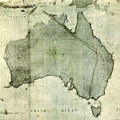
It introduces them to us, tells the tale of their long-tried patience and stubborn endurance, how they lived and did their work, and gives a short but graphic outline of the work they accomplished in opening out and preparing Australia as another home for our race on this side of the world.

15.1. JOHN MCKINLAY.

John McKinlay was born at Sandbank, on the Clyde, in 1819. He first came to the colony of New South Wales in 1836, and joined his uncle, a prosperous grazier, under whose guidance he soon became a good bushman with an ardent love of bush life. He took up several runs near the South Australian border, and thenceforth became associated with that province.

16.1. ERNEST GILES.

Ernest Giles was born at Bristol, a famous birthplace of adventurous spirits. He was educated at Christ's Hospital, London, and after leaving school came out to South Australia to join his parents, who had preceded him thither. In 1852 he went to the Victorian goldfields, and subsequently became a clerk, first in the Post Office, Melbourne, and afterwards in the county court.

It was on April 20, 1534, that Jacques Cartier sailed out of the port of St Malo on his first voyage in the service of Francis I. Before leaving their anchorage the commander, the sailing-masters, and the men took an oath, administered by Charles de Mouy, vice-admiral of France, that they would behave themselves truly and faithfully in the service of the Most Christian King. The company were borne in two ships, each of about sixty tons burden, and numbered in all sixty-one souls.

On June 25 Cartier turned his course away from Newfoundland and sailed westward into what appeared to be open sea. But it was not long before he came in sight of land again. About sixty miles from the Newfoundland shore and thirty miles east from the Magdalen Islands, two abrupt rocks rise side by side from the sea; through one of them the beating surf has bored a passage, so that to Cartier's eye, as his ships hove in sight of them, the rocks appeared as three.

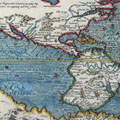
The second voyage of Jacques Cartier, undertaken in the years 1535 and 1536, is the exploit on which his title to fame chiefly rests. In this voyage he discovered the river St Lawrence, visited the site of the present city of Quebec, and, ascending the river as far as Hochelaga, was enabled to view from the summit of Mount Royal the imposing panorama of plain and river and mountain which marks the junction of the St Lawrence and the Ottawa.

Syndicate content